
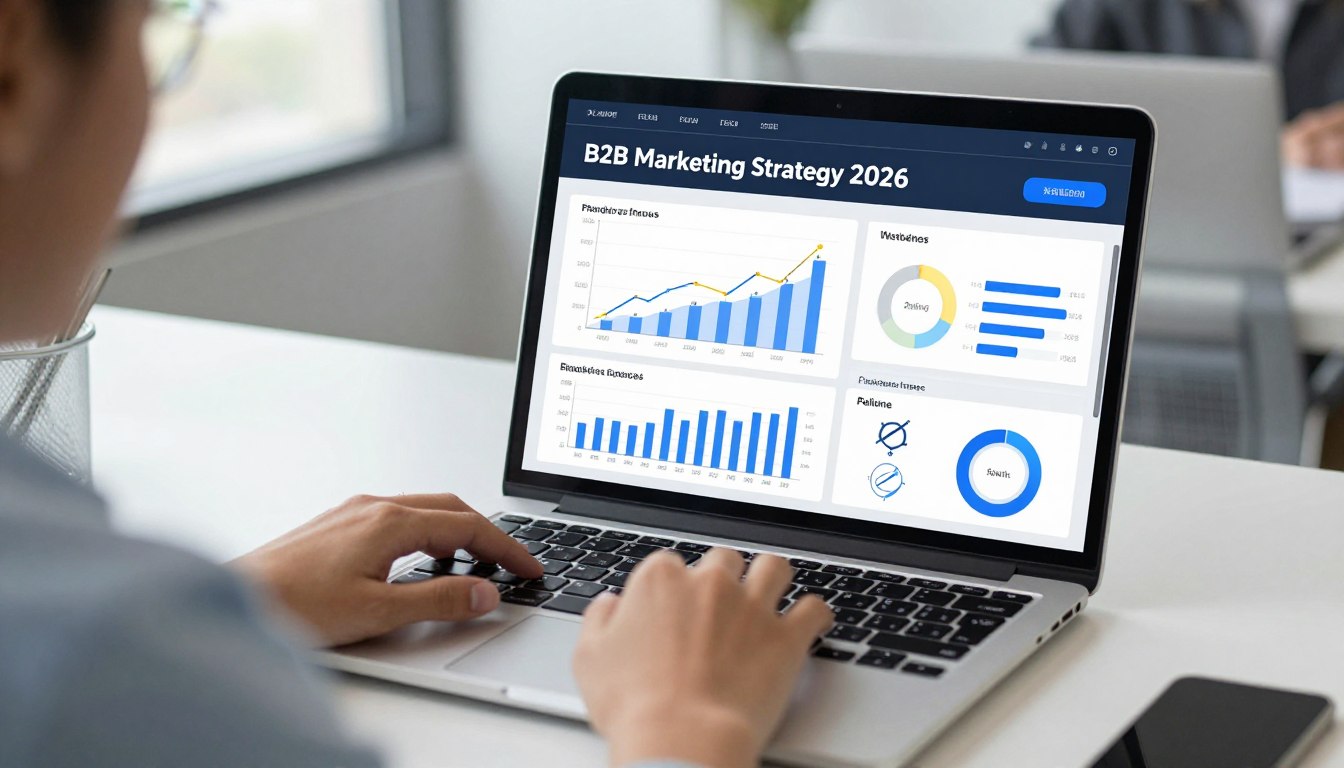
The b2b sales and marketing trends 2026 landscape has fundamentally shifted. Marketing teams no longer debate whether AI will transform their operations. They now focus on how to deploy AI agents alongside human teams. Buyers expect D2C-level digital experiences in complex B2B purchasing decisions. Revenue leaders face pressure to demonstrate measurable pipeline impact while navigating generative engine optimization and evolving search behaviors.
This playbook examines five defining trends reshaping B2B growth strategies. Each section moves from trend analysis to execution frameworks. Decision-makers will find concrete steps to adapt their go-to-market approach, optimize their martech stack, and build sustainable competitive advantages in an AI-first business environment.
The insights draw from current industry data, buyer behavior research, and operational implementations across enterprise B2B organizations. The goal is practical guidance that reduces CAC, shortens sales cycles, and aligns teams around 2026 realities.
Snapshot of B2B Sales and Marketing in 2026
The Fundamental Shift in B2B Buying Behavior
B2B buyers now complete 70% of their research before engaging sales teams. This shift extends beyond self-service. Buyers use AI research assistants to evaluate vendors, compare solutions, and validate claims. The buyer journey compresses in some areas while extending in others as committees grow larger.
Marketing must deliver value at every digital touchpoint. Generic content no longer ranks in search results or appears in AI-generated summaries. Credibility comes from demonstrated expertise, community leadership, and authentic buyer insights rather than promotional messaging.
2025 vs 2026 B2B Go-to-Market Comparison
| Dimension | 2025 Approach | 2026 Reality |
| Content Strategy | SEO-optimized blog posts, keyword targeting | GEO-optimized answers, entity-based content, AI citation-worthy depth |
| Lead Generation | Gated content, form-heavy capture | Community engagement, intent data, progressive profiling |
| Sales Process | Linear funnel, MQL handoff | Non-linear journey, AI-assisted qualification, buying committee orchestration |
| Customer Data | CRM-centric, siloed analytics | Unified customer data platforms, AI-powered intelligence |
| Channel Mix | Paid ads, email campaigns, webinars | Community platforms, events, AI answer engines, video-first content |
Revenue Impact Metrics That Matter
Organizations track different KPIs in 2026. Pipeline velocity matters more than raw lead volume. Time-to-value metrics replace vanity engagement numbers. Marketing attribution shifts from last-touch models to multi-touch analytics that account for dark social and community influence.
Customer acquisition costs rise across most B2B sectors. Winning teams offset this through higher conversion rates, improved retention, and expanded account value. The focus moves from filling the top of the funnel to optimizing every stage of the customer journey with data and intelligence.
Stay Ahead of 2026 B2B Marketing Shifts
Get monthly insights on emerging trends, implementation strategies, and industry benchmarks delivered to your inbox. Join 15,000+ B2B leaders.
Trend 1 – AI Agents and Automation as the New “Team Members”

What AI Agents Actually Do in B2B Marketing Operations
AI agents function as autonomous team members that execute specific marketing tasks. They draft personalized outreach, qualify leads based on behavioral data, optimize campaign performance in real time, and generate content briefs. These agents differ from simple automation by making decisions based on data patterns and learning from outcomes.
Marketing teams deploy agents across the funnel. Prospect research agents scan company signals and buying intent data. Content agents analyze top-performing assets and suggest optimization. Campaign agents adjust spending across channels based on conversion patterns. Each agent handles repetitive intelligence work that previously consumed hours of human time.
Real-World Implementation Example
A software company deployed an AI agent to qualify inbound demo requests. The agent analyzes company size, technology stack, website content, and engagement history. It scores leads and routes high-intent prospects to senior sales reps within minutes. Low-fit leads receive automated nurture sequences. Result: sales team focuses on qualified opportunities while CAC drops 34% over six months.
The Risk Nobody Discusses
Over-automation creates distance from customers. B2B buyers detect AI-generated outreach and tune it out. Marketers who rely entirely on AI agents lose the human insights that drive breakthrough campaigns. The pitfall is treating AI as a replacement rather than an amplifier of human judgment and creativity.
How to Execute AI Agent Integration
- Start with one high-volume, low-complexity task like lead scoring or email response categorization
- Define clear success metrics before deployment including accuracy rates and time savings
- Maintain human oversight loops where agents flag edge cases for review
- Train agents on your brand voice, ideal customer profile, and business rules
- Scale gradually as teams build confidence and identify additional use cases
AI agents work best when teams understand their limitations. They excel at pattern recognition and execution speed. They struggle with nuance, relationship building, and strategic decisions. The winning approach pairs agents with experienced marketers who provide direction and quality control.
Trend 2 – Human-First Content in an AI-First World

Why Generic Content No Longer Ranks or Converts
Search engines and AI platforms prioritize content that demonstrates genuine expertise and unique perspective. Generic how-to guides and surface-level trend lists get filtered out. B2B buyers seek insights they cannot generate with AI tools. This creates premium value for content based on original research, proprietary data, and lived experience.
Marketers must prove subject matter authority. This means citing specific examples, sharing case study data, and providing frameworks buyers can implement. Content that merely summarizes existing information loses visibility in both traditional search and generative engine results.
The Emergence of GEO for B2B Marketing
Generative engine optimization focuses on how AI answer engines cite and reference content. Unlike traditional SEO, GEO prioritizes structured data, entity relationships, and citability. B2B marketers optimize for being quoted by AI rather than ranking in position one.
Effective GEO strategies include clear definitions, data citations, expert quotes, and logical content hierarchy. AI engines favor content that answers questions directly and provides verifiable information. This aligns perfectly with B2B buying behavior where buyers use AI research assistants to evaluate vendors.
Video as the New Trust Currency
Video content builds credibility faster than text in 2026. B2B buyers want to see the people behind brands. Short-form video explaining complex concepts, customer testimonials, and founder insights drive engagement. Video also appears prominently in search results and AI-generated recommendations.
Teams should prioritize authentic video over polished production. Buyers value substance over cinematography. A product manager explaining a use case on camera builds more trust than a scripted commercial spot.
Content Execution Framework
- Develop original research or proprietary data that provides unique market insights buyers cannot find elsewhere
- Create video content featuring internal experts explaining complex concepts in accessible language
- Structure all content with clear headings, definitions, and data points optimized for AI citation
- Build comprehensive resource pages that serve as authoritative references on specific topics
- Update existing content with current data and examples rather than constantly creating new assets
Trend 3 – D2C-Level Digital Experiences in B2B

What B2B Buyers Now Expect from Digital Channels
B2B buyers bring consumer purchasing expectations into business buying decisions. They want self-service pricing, instant product configuration, real-time inventory visibility, and streamlined checkout. The traditional request-a-quote model frustrates modern buyers who expect transparency and speed.
Digital commerce extends beyond e-commerce storefronts. It includes interactive product demos, ROI calculators, implementation timelines, and customer portals. B2B organizations that deliver these experiences see higher conversion rates and shorter sales cycles.
The B2B Digital Commerce Spectrum
Organizations adopt different digital commerce models based on product complexity and buyer needs. Simple products move to full self-service purchase. Complex solutions use hybrid models where buyers configure options digitally but finalize with sales teams. The key is reducing friction at every stage.
Successful implementations balance automation with human support. Buyers can research and configure independently. When they need expertise, chat support or sales assistance activates instantly. This approach satisfies both efficiency-focused buyers and those requiring consultative guidance.
Implementation Challenge and Solution
An industrial equipment manufacturer struggled with long quote cycles. Buyers requested quotes and waited days for sales responses. The company built a digital configurator that generated instant pricing for 80% of standard configurations. Sales reps focused on custom projects. Quote-to-order time dropped from 8 days to 2 hours for standard products.
Execution Steps for Digital Experience Transformation
- Map current buyer journey and identify friction points where buyers wait for information or approvals
- Implement transparent pricing for standard products and configurations to reduce quote requests
- Build self-service customer portals for order tracking, documentation access, and support ticket management
- Develop interactive tools like ROI calculators and product configurators that provide immediate value
- Create seamless handoffs between digital channels and human sales support for complex decisions
Digital experience investment pays off through reduced sales costs and higher customer satisfaction. Organizations should start with one high-impact area rather than attempting complete transformation simultaneously. Test, measure, and expand based on buyer adoption and business results.
Trend 4 – Events and Communities at the Center of Demand

Why Events Deliver Disproportionate Pipeline Value
In-person and virtual events generate higher-quality leads than most digital channels. Events attract buyers actively researching solutions. The concentrated time investment signals genuine interest. Conversations reveal pain points, budget reality, and decision timelines that forms and emails cannot capture.
Events also build relationships that accelerate deals. Buyers who meet teams face-to-face convert at higher rates. The trust established through personal interaction shortens sales cycles and reduces objections. Smart B2B marketers allocate growing percentages of budget to event strategies.
Community as a Moat Strategy
Online communities create sustainable competitive advantages. Engaged communities generate user-generated content, peer recommendations, and organic brand advocacy. Members solve each other’s problems, reducing support costs. The community becomes a destination that competitors cannot easily replicate.
Successful B2B communities focus on member value rather than product promotion. They facilitate peer learning, provide exclusive insights, and create networking opportunities. The brand plays host and curator rather than constant marketer. This approach builds genuine loyalty and long-term customer relationships.
Hybrid Event Model Example
A marketing software company hosts quarterly virtual summits and monthly local meetups. Virtual events reach broad audiences with thought leadership content. Local meetups build deep relationships in key markets. The combination generates consistent pipeline while strengthening community bonds. Annual customer retention increased 23% after launching the community program.
Building Event and Community Programs
- Define clear community purpose beyond product discussion including peer learning and industry advancement
- Start with one event format and perfect it before expanding to multiple event types
- Create ongoing engagement between events through online forums, newsletters, and discussion groups
- Empower community members to contribute content, lead discussions, and organize local chapters
- Measure community health through engagement metrics not just member counts or event attendance
- Invest in community management as a dedicated role with resources and executive support
Trend 5 – Martech Stacks: Platforms, Composable and AI Agents
The Platform Consolidation Wave
Marketing technology vendors consolidate features into comprehensive platforms. Organizations reduce point solutions and simplify integrations. All-in-one platforms promise efficiency but risk vendor lock-in. The decision between best-of-breed tools versus integrated platforms depends on team size, technical resources, and specific workflow requirements.
Platform selection impacts every marketing operation. Teams should evaluate integration capabilities, data portability, and customization options. The cheapest solution often creates long-term costs through limited functionality or difficult migrations. Strategic martech decisions require input from marketing, IT, and finance teams.
Composable Architecture for Flexibility
Composable martech stacks use modular components connected through APIs. This approach provides flexibility to swap tools without disrupting the entire system. Organizations select specialized best-in-class solutions for each function. Composable architecture requires stronger technical skills but delivers customization and agility.
The composable approach works well for organizations with unique requirements or those operating in rapidly changing markets. It allows testing new tools without major commitments. The trade-off is increased complexity in maintenance and integration management.
AI Agents Within the Martech Stack
AI agents integrate across martech platforms to automate workflows and surface insights. An agent might pull data from the CRM, analyze campaign performance in the marketing automation platform, and adjust ad spending in paid channels. These cross-platform agents create intelligence layers that individual tools cannot provide.
Teams should implement agents that solve specific operational problems. An ABM team might deploy an agent that identifies account engagement patterns and triggers personalized campaigns. A content team might use an agent that analyzes performance data and recommends optimization priorities.
Martech Stack Decision Framework
- Audit current tools to identify unused features, redundant capabilities, and integration gaps
- Define core marketing workflows and map required tool capabilities for each process
- Evaluate whether platform consolidation or composable architecture better fits team skills and needs
- Prioritize data integration and unified customer views over feature quantity in vendor selection
- Build internal expertise or partner with specialists for complex implementations and optimization
- Plan for change management and team training as essential components of any martech investment

90-Day Action Plan to Operationalize 2026 B2B Trends
Days 1-30: Assessment and Foundation
Begin with comprehensive baseline assessment. Audit current content performance in both traditional search and AI platforms. Test how generative AI tools reference your content. Analyze buyer journey data to identify friction points in digital experiences. Survey customers about their research and buying preferences.
Establish measurement frameworks. Define KPIs for AI agent performance, content effectiveness, digital experience satisfaction, community engagement, and martech ROI. Set baseline metrics so progress tracking begins immediately. Secure executive alignment on priorities and resource allocation.
Start one AI agent pilot project. Select a high-volume, clearly-defined task. Establish success criteria and oversight protocols. Document learnings for team-wide knowledge sharing.
Days 31-60: Implementation and Testing
Launch content transformation initiatives. Develop original research or customer insight reports. Create video content featuring internal experts. Optimize existing high-performing content for GEO by adding structured data, clear definitions, and citeable facts.
Improve one digital experience touchpoint. This might mean adding transparent pricing, building an ROI calculator, or streamlining the demo request process. Implement analytics to measure adoption and impact. Gather user feedback for iteration.
Plan first community event or virtual gathering. Define purpose, audience, and success metrics. Build promotion plan and content agenda. Focus on delivering member value rather than product pitches.
Days 61-90: Scaling and Optimization
Expand successful AI agent pilots. If initial results meet targets, extend to additional use cases. Train teams on working alongside AI agents. Document workflows and best practices. Evaluate where human judgment remains essential versus where automation can expand.
Execute community event and measure results. Track attendance, engagement quality, pipeline generated, and member satisfaction. Gather feedback for improvement. Build plan for ongoing community activation between events.
Review all initiatives against established KPIs. Identify what’s working and what requires adjustment. Develop 6-month roadmap based on learnings. Secure resources and budget for continued investment in high-performing strategies.
Quick-Start Tactical Checklist
- Week 1: Complete SERP analysis for your top 10 keywords in traditional and AI search engines
- Week 2: Interview 5 recent customers about their buyer journey and research process
- Week 3: Audit martech stack utilization and identify consolidation opportunities
- Week 4: Select and scope first AI agent pilot with clear metrics and timeline
- Week 6: Launch first GEO-optimized content piece with structured data and original insights
- Week 8: Implement one digital experience improvement and begin measuring adoption
- Week 10: Announce first community event or virtual gathering with member-focused agenda
- Week 12: Conduct 90-day review and develop 6-month strategic roadmap
Download Your 90-Day B2B Transformation Checklist
Get the complete implementation checklist with week-by-week tasks, measurement templates, and resource guides. Turn 2026 trends into operational reality.
Frequently Asked Questions About B2B Sales and Marketing Trends 2026

What are the top B2B marketing trends for 2026?
The top b2b marketing trends include AI agents functioning as autonomous team members, human-first content optimized for generative engines, D2C-level digital experiences in B2B commerce, events and communities as primary demand channels, and consolidated martech stacks with AI integration. These trends reflect fundamental shifts in buyer behavior and technology capabilities.
How will AI agents change B2B buying and selling?
AI agents automate repetitive intelligence tasks like lead qualification, content optimization, and campaign management. They allow human teams to focus on strategy and relationship building. On the buying side, AI research assistants help buyers evaluate vendors faster. B2B marketers must create content that AI agents cite and optimize experiences for both human and AI researchers.
What is generative engine optimization (GEO) and why does it matter for B2B?
GEO focuses on optimizing content to be cited by AI answer engines like ChatGPT, Perplexity, and Google AI Overviews. Unlike traditional SEO, GEO prioritizes citability, structured data, and entity relationships. It matters for B2B because buyers increasingly use AI tools for research. Content that AI engines quote gains visibility and credibility with target buyers.
Should B2B companies invest more in events or digital channels in 2026?
The answer is both, integrated strategically. Events generate high-quality pipeline and build relationships that digital channels cannot replicate. However, digital channels scale reach and maintain engagement between events. Winning strategies use events to deepen relationships while digital channels drive awareness and nurture prospects. Budget allocation depends on sales cycle length and average deal size.
How should B2B marketers prioritize these trends with limited resources?
Start with buyer journey analysis to identify the highest-impact opportunities. Organizations with long sales cycles should prioritize content and community. Those with shorter cycles may benefit more from digital experience improvements and AI agent automation. Test one initiative in each category, measure results, then scale what works. Avoid spreading resources across all trends simultaneously.
What metrics should B2B teams track to measure success with 2026 trends?
Focus on business impact metrics over vanity numbers. Track pipeline velocity, customer acquisition cost, sales cycle length, win rates, and customer lifetime value. For specific initiatives, measure AI agent time savings, content citation rates in AI platforms, digital experience conversion improvements, community engagement quality, and martech ROI. Align all metrics with revenue outcomes.
Next Steps for B2B Leaders Adapting to 2026 Trends

The b2b sales and marketing trends 2026 create both challenges and opportunities. Organizations that adapt quickly gain competitive advantages while others struggle with outdated approaches. The key is starting immediately with focused initiatives rather than waiting for perfect conditions.
Begin with assessment and pilot projects. Test AI agents on specific tasks. Optimize your best content for generative engines. Improve one digital experience touchpoint. Plan a community event. These small steps build momentum and demonstrate value to stakeholders.
Success requires balancing technology adoption with human expertise. AI agents amplify team capabilities but cannot replace strategic thinking. Digital experiences improve efficiency but relationships still close complex deals. The winning formula combines intelligent automation with authentic human connection.
B2B marketers should focus on buyer value above all else. Every trend in this playbook succeeds when it helps buyers make better decisions faster. Organizations that truly understand buyer needs and remove friction will thrive regardless of technological changes.
The time for action is now. Markets move quickly and competitive advantages compound over time. Use the 90-day action plan as a starting framework. Adapt it to your specific context and constraints. Measure results rigorously and iterate based on data.
Ready to Transform Your B2B Strategy?
Schedule a 30-minute trends assessment with our B2B strategy team. We’ll analyze your current approach and identify your highest-impact opportunities for 2026.
